
Why Are Tulip Setting Engagement Rings & Fine Jewellery a Timeless Choice?

Most people, when they start thinking about what makes an engagement ring truly beautiful, focus on the diamond. The cut, the carat, the colour. What they don't always consider is what keeps that diamond exactly where it belongs, and how much the setting shapes the way the stone looks, feels, and catches the light.
This is where tulip setting fine jewellery comes in. Once you've seen one in person, it becomes very hard to look at a standard prong setting the same way again. Tulip setting, also called flower setting is marvellously beautiful, it adds a very personal, feminine touch to a piece of jewellery, but it's also highly practical.
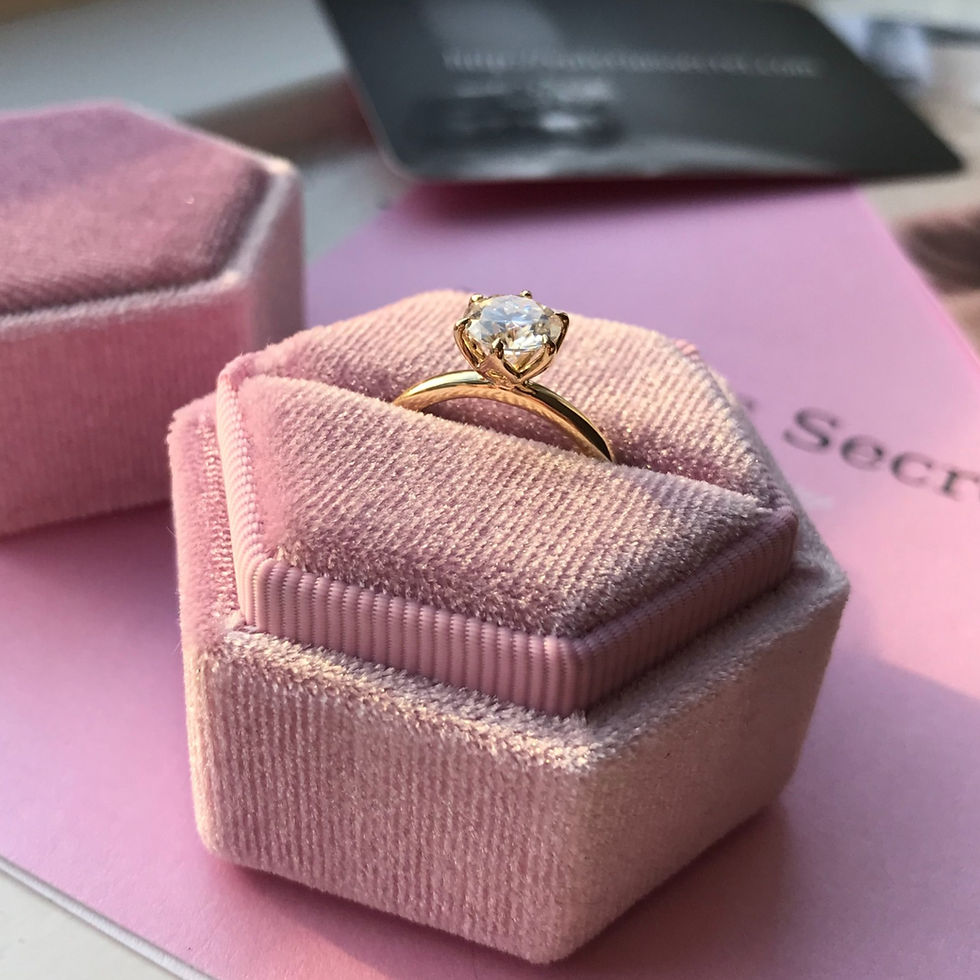
The tulip setting takes its name from its shape. The prongs that hold the stone are gently curved to resemble petals in bloom. They arch inward toward the base of the diamond, then sweep back out beneath it, creating a cradle that feels both structural and organic.
It isn't ornamentation for its own sake. The curve of those petal prongs does real work: it lifts the stone a little higher, holds it securely, and frames it so that the setting becomes part of the design rather than something added at the end. Tulip setting engagement rings are rare in this way. The architecture around the stone is planned as carefully as the diamond itself.
The Tulip Setting Ring: Where Nature Meets Fine Jewellery
A tulip setting ring is built around one central idea: the prongs holding the stone should never be an afterthought. In a more ordinary four or six-prong setting, the prongs are purely functional. They grip the stone, then step back.
In a tulip setting, those same prongs are reshaped into curved, petal-like forms that sweep up and inward toward the stone's girdle. From the side, the ring can feel almost biological, like a small flower closed around something precious. From above, the centre stone appears to float inside a delicate crown of metal that borders it without ever blocking it.
This isn't only a visual trick. The curved prong design can help spread pressure more evenly around the stone's edge than straight prongs would. The organic shape also has no harsh angles to catch on fabric or snag clothing, so it wears as well as it looks.
And because the petals curve under the stone instead of simply gripping from above, the diamond appears to sit inside the ring, not on top of it. That sense of stone and setting becoming one is the part people can't always put a name to, but you notice it the first time you hold one.
Why Tulip Setting Engagement Rings Suit Every Stone Shape
One of the practical strengths of the tulip setting is how well it adapts. Unlike settings that work best with one particular shape, tulip setting engagement rings are equally at home with round brilliants, ovals, pear cuts, cushion cuts, and marquise stones. The petal prongs adjust to hold different girdle shapes without losing their defining character. What changes is the way the tulip frames each stone:
Round brilliant: sits inside its petal crown with a particular, balanced symmetry.
Oval: creates a longer, more graceful silhouette.
Pear and marquise: give the setting an almost Art Nouveau quality, as though the stone is a blossom and the petals are growing up to meet it.
Tulip Setting Diamond Ring: The Classic at Its Best
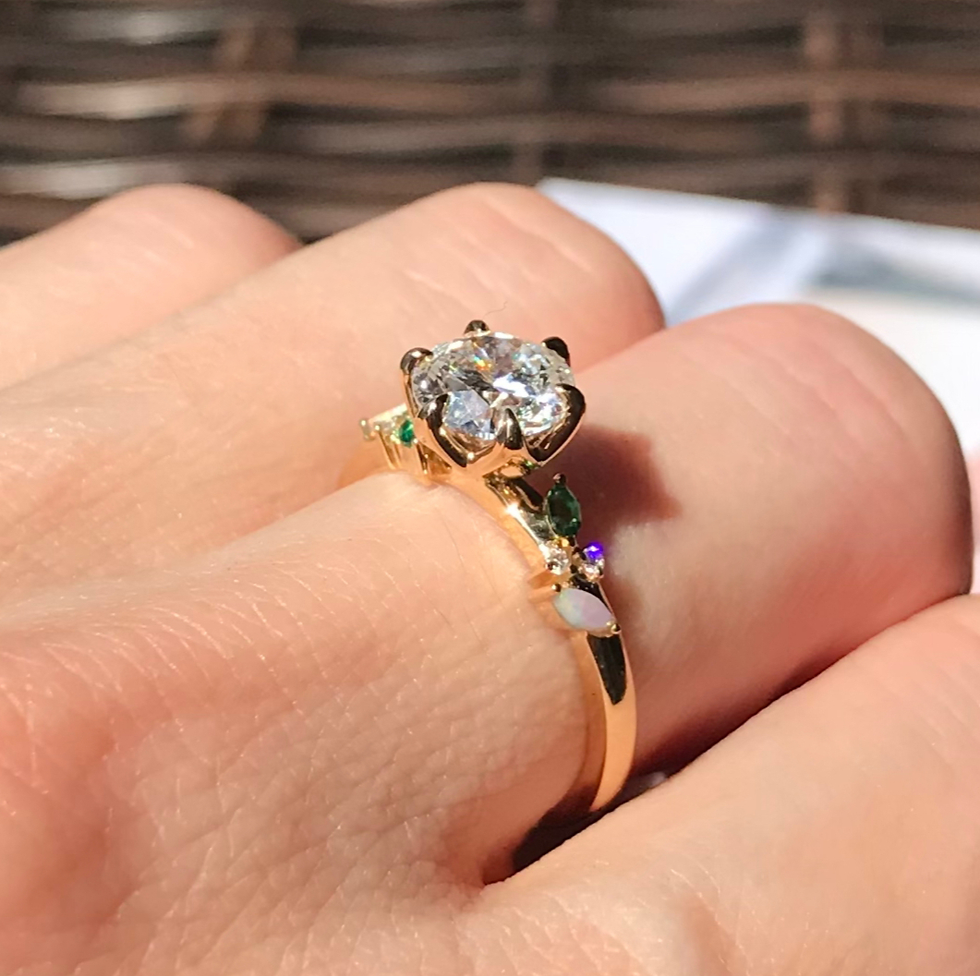
A round brilliant in a tulip setting is where this style feels most fully itself. A tulip setting diamond ring with a round stone gives you perfect radial symmetry. The four or six petal prongs space themselves evenly around the circumference, creating a crown that looks as intentional from every angle as it does from directly above.
The round brilliant's 58 facets send light in every direction, and the curves of the tulip setting let that light escape from the sides just as freely as from above. The two elements work together as a single design, so the ring feels alive whenever it moves or turns.
Tulip Solitaire Setting: Simplicity That Doesn't Compromise
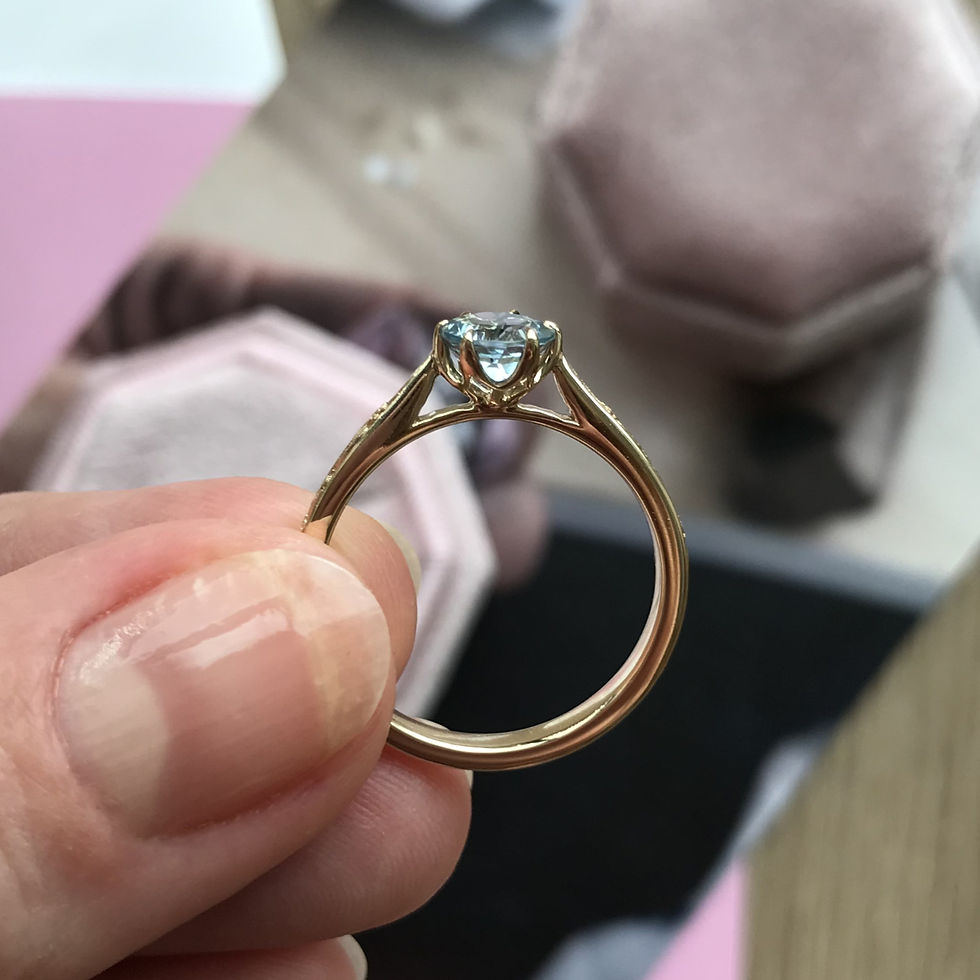
A tulip solitaire setting is for those who want one stone, no distraction, and a setting that earns its place without extra diamonds to justify it. From above, a single-stone tulip looks deceptively minimal: a stone, a band, and what seems to be a simple prong-hold.
It's only when you turn the ring to the side that its character fully reveals itself. Those curved petals arching beneath the stone give the ring a depth and intentionality that a standard solitaire rarely achieves.
Tulip Cathedral Setting: Height, Drama, and Floral Architecture
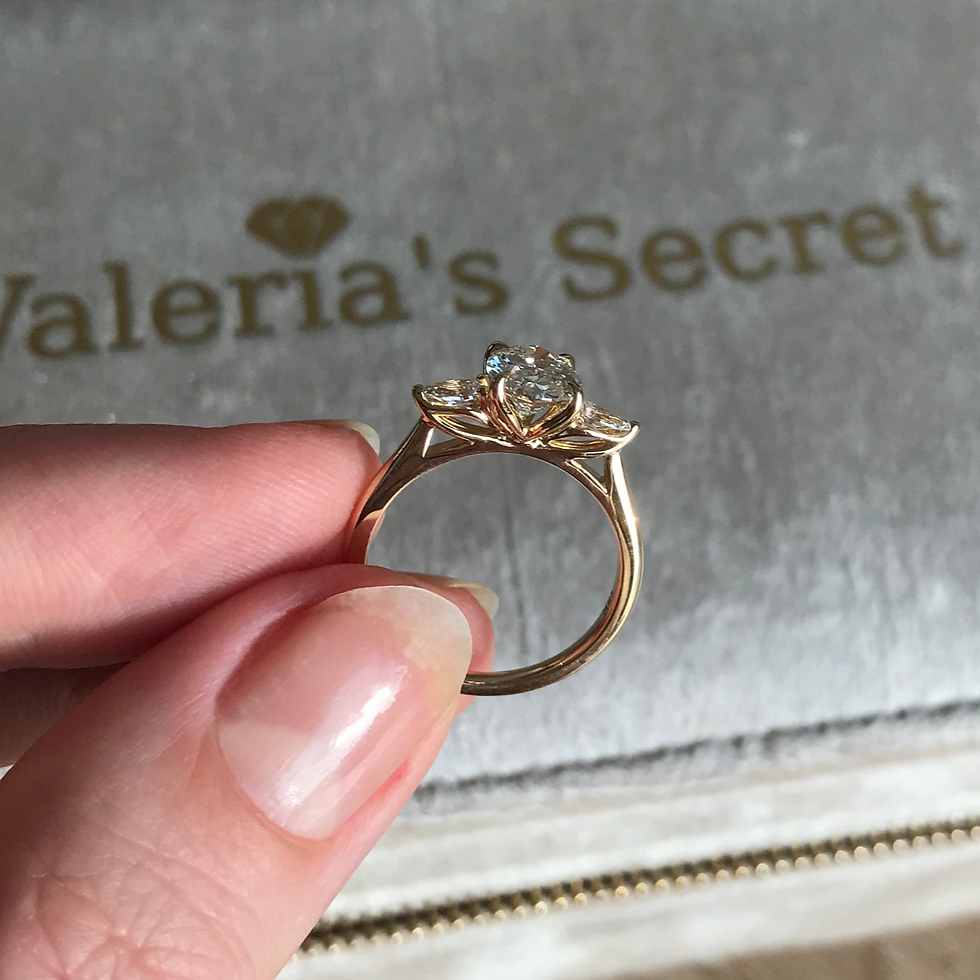
When the tulip setting is combined with a cathedral base, where the band rises in arches to meet the setting, the result is one of the most dramatic profiles in engagement ring design. A tulip cathedral setting lifts the stone high above the finger on sweeping metal arches, while the petal prongs form a floral crown at the top.
From the side, the ring has an almost architectural quality, with cathedral arches below and flower petals above. It's a choice for someone who wants their ring to be genuinely seen.
Oval Cathedral Engagement Ring in a Tulip Setting
An oval cathedral engagement ring in a tulip setting is probably the most requested pairing at Valeria's Secret, and it isn't hard to see why. The oval's elongated outline lengthens the finger subtly and gracefully. The cathedral arches add elevation and a touch of drama, and the tulip prongs hold the stone with a kind of botanical precision.
All three elements, the stone's shape, the base, and the crown, point in the same direction, so the ring feels fully considered rather than pieced together from separate choices.
Tulip Engagement Ring: The Detail That Rewards Looking Closely
What sets a tulip engagement ring apart from other settings is the moment you truly notice it. Most people meeting one for the first time can't immediately say what they're seeing. They just sense that the ring is different in a way they can't quite pin down.
Then someone tilts it to the side, the petals come into view, and everything clicks. A ring that reveals more the longer you look is uncommon in fine jewellery, and it appeals especially to anyone who wants a piece that keeps surprising them rather than one that simply sits there.
What Makes Tulip Setting Engagement Rings Worth Choosing
Beyond the aesthetics, tulip setting engagement rings offer practical advantages that matter over a lifetime of daily wear:
Gentler on skin and fabric. The curved prongs have no sharp edges to catch, so they are kinder than standard prongs.
A secure hold from below. The petals cradle the stone beneath, giving the setting more contact with the diamond's pavilion and a firm grip without relying only on pressure from above.
Sturdy where it counts. Tulip prongs are typically fuller at the base and taper toward the stone's edge, a shape that supports the diamond well and wears with confidence over the years.
What a Tulip Setting Says
There is also something to be said for what tulip setting engagement rings communicate. A standard prong setting says, "This is a diamond, held in place." A tulip setting says, "This is a diamond, held as if it matters, as if the ring itself has some feeling for the stone it carries."
That sounds like a small thing. It isn't. The emotional charge of fine jewellery lives almost entirely in details like this, in the sense that something was made with attention rather than just competence.
If you've been looking at tulip setting engagement rings and wondering whether they're right for you, the answer is very often yes, provided you want a ring that does more than hold a stone. They suit people who notice the detail in things and appreciate it when something has been made with more thought than was strictly necessary. People who, when they find a ring they love, love it for reasons they can't entirely explain. Which, if we're honest, is how the best rings always work.
Choosing Your Tulip Setting Engagement Ring
The petals do real work. Curved prongs lift the stone higher, hold it securely, and frame it as part of the design rather than an afterthought.
It suits every stone shape. Round, oval, pear, cushion, and marquise: the petal prongs adapt without losing their defining character.
The solitaire tulip is deceptively minimal. Clean from above and full of character from the side, its depth reveals itself when you turn the ring.
The cathedral tulip is the most dramatic. Arches below, petals above: a silhouette for someone who wants their ring to be genuinely seen.
The oval cathedral is the most requested. Form, base, and crown all point in the same architectural direction.
It's made for everyday wear. No sharp edges, more contact with the pavilion, and a sturdy, tapering prong shape.
Find Your Tulip Setting Engagement Ring
At Valeria's Secret, every tulip setting pair of earrings or engagement ring are made with the same attention the setting itself demands. If you can, hold one in person. It's the best way to understand what the petals do.
Valeria's Secret - fundamentally different 💕 with love xxx


Comments